
More details
Collapse details
Date Published:
Filesize:
- January 1, 2024
NOAA Fisheries Science Centers have recently incorporated drifting acoustic spar buoy recorders (DASBRs) into their standard large-scale survey designs. Drifting autonomous instruments have many advantages, especially for species that are difficult to see at the surface, are vocal at depth, and whose sounds have been well characterized such that they can be readily identifiable from autonomous recordings. Pacific Islands Fisheries Science Center deployed DASBRs throughout the survey region with the goal of collecting data on the occurrence of beaked whales and other cryptic deepdivers. Traditional line-transect assessments for those species are often challenged by very low encounter rates, resulting in density and abundance estimates with high uncertainty, or in some cases, no estimates if groups were not seen during the ‘on-effort’ portions of the survey. Previous experience in the Marianas suggested that encounter rates for beaked whales on the DASBRs would be orders of magnitude higher within the DASBR data than in the visual survey or towed array datasets, likely enabling examination of density for some beaked whale species using the newly developed methods of Barlow et al. (2021a). Here, we detail our methodology to estimate density and abundance using 2021 survey dataset and how 2018 survey data were used to inform the detection parameters. This analysis has resulted in the first preliminary acoustic density and abundance estimates for Cuvier’s and Blainville’s beaked whales in the Mariana Islands region.
- 1,395.83 KB
More details
Collapse details
Date Published:
Filesize:
- June 20, 2018
Coral reef surveys were conducted at Farallon de Medinilla (FDM) September 27 – October 1, 2017 by Space and Naval Warfare (SPAWAR) Systems Center Pacific, Scientific Diving Services (SDS) to satisfy requirements of the Mariana Islands Training and Testing Area Biological Opinion (MITT BO) issued by the National Marine Fisheries Service in 2015 (NMFS 2015). The primary objectives of this survey were to quantify the abundance and location around the island of Endangered Species Act (ESA)-listed corals, quantify coral reef health (percent cover of living coral, coral species composition, and coral condition), and compile observations of ordnance impacts
- 7,446.41 KB
More details
Collapse details
Date Published:
Filesize:
- October 1, 2018
Coral reef surveys were conducted at Farallon de Medinilla (FDM) September 27 – October 1, 2017 by Space and Naval Warfare Systems Center Pacific (SSC Pacific), Scientific Diving Services (SDS) to satisfy requirements of the Mariana Islands Training and Testing Area Biological Opinion (MITT BO) issued by the National Marine Fisheries Service in 2015 (NMFS 2015). Two reports have been produced, based upon the field data obtained. The first report, entitled “Farallon De Medinilla 2017 Coral Reef Survey Report,” is dated May 2018 (Carilli et al. 2018). This document should be regarded as the second report of the 2017 survey results
- 6,300.50 KB
Coral bleaching variability during the 2017 global bleaching event on a remote, uninhabited island in the western Pacific: Farallon de Medinilla, Commonwealth of the Northern Mariana Islands.
Bulletin of Marine Science. 2020.
96(4), 785-802
More details
Collapse details
Date Published:
- January 1, 2020
Marine mammal acoustic survey findings from Pagan Island, Commonwealth of the Northern Mariana Islands (CNMI).
21st Biennial Conference on the Biology of Marine Mammals .
More details
Collapse details
Date Published:
Filesize:
- December 13, 2015
Passive acoustic monitoring was conducted during a survey of marine mammals in nearshore waters surrounding Pagan Island, a remote volcanic island in the western tropical Pacific, part of the Commonwealth of the Northern Marianas Islands. The objective was to collect baseline information for Department of Defense's CNMI Joint Military Training Environmental Impact Statement. The primary effort was conducted over 11 days in August 2013. Visual/acoustic line-transect surveys were conducted using a towed hydrophone array system during daytime, and moored sonobuoys were deployed at night. Fourteen acoustic encounters occurred during line-transect surveys consisting of the following (subtotal in parentheses): bottlenose dolphin (1), spinner dolphin (1), beaked whales (4), and unidentified dolphins (8). Of this total, eleven were acoustic only encounters and three were concurrently sighted by observers. The four beaked whale acoustic encounters could not be classified in the field so data were post-processed resulting in the following classifications: Blainville's beaked whales (3) and Cuvier's beaked whale (1). Localization ranges (perpendicular to trackline) were between 0.3 and 2 km and varied by species/species groups. Sonobuoys were moored in depths of 30-50m at two sites located off sand beach areas on the west side of the island. Approximately 67 hours of recordings were made for an average recording duration of 7.4 hours per night. The majority of detection events (55) were of dolphins (undetermined species). Sperm whales were detected once by each sonobuoy. In summary, passive acoustic methods were able to detect delphinids, as well as deep diving species during both line-transect surveys and shallow water sonobuoy monitoring sites. Although brief in duration, this effort provided important information about the occurrence of several species of marine mammals documented for the first time at this remote island.
- 91.91 KB
Vessel-based Humpback WhaleSurvey in and around Farallon de Medinilla: 29 January − 4 February 2020.
More details
Collapse details
Date Published:
Filesize:
- February 1, 2021
In order for the U.S. military to conduct readiness training with the Mariana Island Training and Testing Study Area (MITT), including the area around Farallon de Medinilla (FDM), the Navy is required to monitor potential impacts of these activities on Marine Mammal Protection Act and Endangered Species Act-listed species. Humpback whales belonging to the North Pacific population are known to use portions of the MITT seasonally for breeding activities, specifically Marpi Reef and shallow waters around Saipan. A small-vessel visual survey for humpback whales was conducted between 29 January 2020 and 1 February 2020 to better understand the use of shallow-water habitat around FDM
- 1,878.86 KB
More details
Collapse details
Date Published:
Filesize:
- March 24, 2013
In order to train with mid-frequency active sonar (MFAS), the United States (U.S.) Navy has obtained a permit from the National Marine Fisheries Service (NMFS) under the Marine Mammal Protection Act and Biological Opinion under the Endangered Species Act. The Mariana Islands Range Complex (MIRC) Monitoring Plan was developed with NMFS to comply with the requirements under the permits. The monitoring plan and reporting requirements provide science-based answers to questions regarding whether or not marine mammals are exposed to, and react to, Navy MFAS and explosives. As such, the Navy developed the MIRC Monitoring Plan to conduct activities that meet these monitoring goals.
- 2,561.29 KB
More details
Collapse details
Date Published:
Filesize:
- January 1, 2012
The U. S. Navy (Navy) has developed this Mariana Islands Range Complex (MIRC) Monitoring Plan to provide marine mammal and sea turtle monitoring as required under the Marine Mammal Protection Act (MMPA) of 1972 and the Endangered Species Act (ESA) of 1973. In order to issue an Incidental Take Authorization (ITA) for an activity, Section 101(a)(5)(a) of the MMPA states that National Marine Fisheries Service (NMFS) must set forth “requirements pertaining to the monitoring and reporting of such taking.” The MMPA implementing regulations in 50 CFR Section 216.104 (a)(13) note that requests for Letters of Authorization (LOAs) must include the suggested means of accomplishing the necessary monitoring and reporting that will result in increased knowledge of the species and of the level of taking or effects to populations of marine mammals that are expected to be present.
- 510.53 KB
Estimation of acoustic-based detection functions for sperm whale encounters in the Northern Mariana Islands.
6th International Workshop on Detection, Classification, Localization and Density Estimation of Marine Mammals using Passive Acoustics. .
More details
Collapse details
Date Published:
Filesize:
- June 12, 2013
A three month visual and acoustic line-transect survey of a large (584,800 km2) study area centered on the Northern Mariana Islands (MISTCS) was conducted in winter of 2007 (DoN 2007). Line-transect survey and analytical methods are well developed for estimating abundance of marine mammals using visual sighting data. These methods also can be applied to acoustic data when a perpendicular distance from the trackline to the "detection" is obtained. Sperm whales produce distinctive broadband (100 Hz to 25 kHz) echolocation signals. Although sperm whales typically produce "regular" clicks, males are known to produce high amplitude clicks with slow inter-click intervals (i.e. "slow" clicks). Previous studies have used a combination of acoustic and visual survey methods to estimate sperm whale densities. The aim of this study was to use acoustic localizations of sperm whales to estimate a detection function for the MISTCS study area. Sperm whale acoustic encounters were post-processed using PAMGuard software to obtain "click files" that were then processed using Rainbow Click software (IFAW). Rainbow Click was used to visualize time/bearing and map displays of detected clicks and associated bearing estimates, and mark individual click trains ("events") for each encounter. Target motion analysis methods utilizing a least squares algorithm to calculate perpendicular distances to each "animal/event" were applied using custom MATLAB code that interfaced with Rainbow Click. Next, perpendicular distances and transect length data were imported into the software program Distance (6.0 release 2) to model detection functions. Models were fit for all clicks types combined, regular clicks only, and slow clicks only. Slow and regular click localizations exhibited different shapes in their distribution, likely because slow clicks have higher amplitudes and can be detected over greater ranges than regular clicks. A discussion of these results and comparisons to similar research using acoustic-based line-transect data will be presented.
- 189.52 KB
Western Pacific Ocean Sperm Whale Coda Repertoires.
Southern California Marine Mammal Workshop 2013. .
More details
Collapse details
Date Published:
Filesize:
- February 1, 2013
Sperm whales are highly social cetaceans that live in matrilineal family units and inhabit all ocean basins from the tropics to polar regions. They produce stereotyped patterns of 3 to 40 broadband clicks, termed “codas,” that typically occur within a period of less than 3 seconds. Coda repertoires are unique for different sperm whale social units. These have been referred to as "dialects" and can be assigned to one of several larger social groups termed "vocal clans," which have been used to define sperm whale population structure. Extensive studies of vocal clans have been conducted in the eastern tropical Pacific Ocean (ETP), however little is known about sperm whale coda repertoires in the western Pacific Ocean. Codas can be classified into types according to the number and temporal pattern of the clicks. Rendell and Whitehead (2003) identified five vocal clans across the ETP and south Pacific oceans. The three dominant clans are termed “regular,” “+1” and “short” based on the predominant coda type represented in the repertoire. We reviewed codas recorded from independent sperm whale groups that were acoustically and visually encountered during two marine mammal surveys in the Northern Mariana Islands and Palau regions, conducted in 2007 and 2012 respectively. Using the sperm whale click detector module and event identification modules in the acoustic processing software PAMGuard, we isolated and identified coda inter-click intervals for ten sperm whale groups from the Mariana Islands survey and three groups from the Palau survey. Three bioacousticians classified each coda to type. Codas that were not classified the same by two or more bioacousticians were excluded from further analysis. This qualitative process of identifying coda types resulted in large representation of the "regular" vocal clan. The identification of regular vocal clans within this region has implications for understanding the culturally-linked stock distribution and population structure of sperm whales in this region and across the Pacific Ocean. Several studies have evaluated the relationship between genetic variation and vocal repertoire to inform sperm whale stock management. To better understand the potential relationship between genetics and population structure of sperm whale stocks within the Pacific Ocean basin, we recommend future studies of sperm whales in the western Pacific Ocean that include genetic sampling paired with passive acoustic monitoring.
- 321.30 KB
Central and western Pacific blue whale song and occurrence.
Journal of the Acoustical Society of America. 2016.
140(4,Part 2):3295
More details
Collapse details
Date Published:
Publication:Ocean:Region:Species:Methods:
- October 1, 2016
Blue whale (Balenoptera musculus) occurrence in the central and western Pacific is not fully understood. However, passive acoustics offer an effective way to monitor remote sites. Blue whale songs are regionally distinct, and their stereotyped characteristics may be used to distinguish populations. Most blue whale song consists of multiple, pulsed and tonal units. However, song in the central and western Pacific consists of only simple tonal units. We investigated song variability of Hawaii, Wake Atoll, Palmyra, and Tinian in the Mariana Islands Archipelago, and highlight differences between blue whale songs amongst sites. Song calls of two different frequencies were recorded by High-frequency Acoustic Recording Packages. Detailed measures of call frequency were taken along the contours of tonal calls and patterning of song sequences was evaluated for recordings from the four locations during 2012 and 2013. The spatial and temporal occurrence of these patterns is discussed.
More details
Collapse details
Date Published:
Filesize:
- January 1, 2011
Cetacean distribution and abundance are reported from the first systematic line-transect visual survey in the waters of Guam and the Commonwealth of the Northern Mariana Islands (CNMI). The survey was conducted during January–April 2007 following standard line-transect protocols. Trackline coverage (11,033 km) was dominated by high sea states (88.2%); however, 13 cetacean species were recorded.
- 3,581.88 KB
Distribution and Abundance Estimates for Cetaceans in the Waters of Guam and the Commonwealth of the Northern Mariana Islands.
Pacific Science. 2011.
Vol. 65, no. 3:321 – 343
More details
Collapse details
Date Published:
Publication:Ocean:Region:Species:Methods:
- January 1, 2011
Cetacean distribution and abundance are reported from the first systematic line-transect visual survey in the waters of Guam and the Commonwealth of the Northern Mariana Islands (CNMI). The survey was conducted during January–April 2007 following standard line-transect protocols.
Distribution and Abundance Estimates for Cetaceans in the Waters off Guam and the Commonwealth of the Northern Mariana Islands.
Pacific Science. 2011.
63(3):321-343
More details
Collapse details
Date Published:
Publication:Ocean:Region:Species:Methods:
- March 1, 2011
Cetacean distribution and abundance are reported from the first systematic line-transect visual survey in the waters of Guam and the Commonwealth of the Northern Mariana Islands (CNMI). The survey was conducted during January – April 2007 following standard line-transect protocols. Trackline coverage (11,033 km) was dominated by high sea states (88.2%); however, 13 cetacean species were recorded. The sperm whale (Physeter macrocephalus) was the most frequently encountered whale, followed by Bryde’s and sei whales (Balaenoptera edeni and B. borealis, respectively). Occurrence of the sei whale is unique, because the species had not been confirmed to occur south of 20° N. The pantropical spotted dolphin (Stenella attenuata) was the most frequently sighted delphinid, followed by the striped dolphin (Stenella coeruleoalba) and false killer whale (Pseudorca crassidens). Humpback whales (Megaptera novaeangliae) were acoustically detected and later seen off Saipan. Numerous cetacean sightings were associated with steep bathymetric features including the West Mariana Ridge, the Mariana Ridge, and the Mariana Trench. Abundance estimates were based on 80 on-effort sightings for 12 species. Species were pooled into three separate groups for estimating detection probabilities: Balaenoptera spp., blackf ish (medium-size odontocetes), and small dolphins. A separate detection function was generated for the sperm whale. Precision of abundance estimates are very low for all species due to low sighting rates and high sea states; however, these abundance estimates serve as the best scientific data available for the area and establish vital baseline information for future research efforts.
More details
Collapse details
Date Published:
Filesize:
- February 1, 2021
The United States Navy developed monitoring questions for the Mariana Islands Training and Testing (MITT) study area under the Mariana Islands Range Complex Monitoring Plan (MIRCMP), including questions specifically related to marine turtles as required under the Endangered Species Act (ESA) of 1973. To support the needs of the U.S. Pacific Fleet Environmental Readiness Office, the Marine Turtle Biology and Assessment Program (MTBAP) of the National Oceanic and Atmospheric Administration (NOAA) has been conducting research on marine turtle abundance and spatial-temporal ecology in the nearshore waters of Saipan, Tinian, and Guam since 2013, under a series of Interagency Agreements (IAA).
- 674.99 KB
More details
Collapse details
Date Published:
Filesize:
- February 1, 2022
In 2013, under an inter-agency agreement (IAA) between the United States Navy and the National Oceanic and Atmospheric Administration (NOAA), NOAA began conducting in-water surveys to record and quantify observations of marine turtles around the Mariana Archipelago. When observed, attempts were made to hand-capture turtles and equipthem with satellite tags in an effort to better understand their spatial ecology.
- 349.81 KB
More details
Collapse details
Date Published:
Filesize:
- January 1, 2024
Understanding the spatio-temporal movements of animals is an integral component of wildlife conservation and management. Sea turtles are species of conservation concern and satellite telemetry is a primary research tool used to study their movements, providing high accuracy location data in near “real time,” thus facilitating rapid identification of movements and key habitats.
- 5,706.75 KB
More details
Collapse details
Date Published:
Filesize:
- January 1, 2020
Understanding the spatio-temporal movements of animals is an integral component of wildlife conservation and management. Marine turtles are species of conservation concern and satellite telemetry is a primary research tool used to study their movements, providing high accuracy location data in near “real time”, thus facilitating rapid identification of movements and key habitats.
- 5,020.67 KB
More details
Collapse details
Date Published:
Filesize:
- December 1, 2011
The objective of this current survey effort was to conduct baseline surveys to further document marine mammal and sea turtle occurrence in nearshore waters around the island of Guam. This report presents the results of the Guam Marine Species Monitoring Survey conducted on the MV Island Girl from February 17 to March 3, 2011.
- 786.14 KB
More details
Collapse details
Date Published:
Filesize:
- February 1, 2012
In September of 2011, four passive acoustic monitoring devices were deployed in the Marianas Island Range Complex (MIRC). These Ecological Acoustic Recorders, or “EARs”, were developed by Marc Lammers and Whit Au at the University of Hawai’i/Hawai’i Institute of Marine Biology. The dates, locations, and deployments depths for the four instruments are summarized in Table 1. Deployments were made to the northwest and southwest of Guam, one to the north off Saipan, and one to the southwest of Tinian.
- 320.24 KB
More details
Collapse details
Date Published:
Filesize:
- March 1, 2012
This report presents the results of the Guam and Saipan Marine Species Monitoring: Winter-Spring Survey conducted on the motor vessel (M/V) Sea Fantasy (Guam survey) and the M/V Super Emerald (Saipan survey) from 15 to 29 March 2012. The objective of the 2012 survey effort was to conduct baseline surveys to further document marine mammal and sea turtle occurrence in nearshore waters around the island of Guam and Saipan. The approach primarily followed opportunistic survey protocols used in recent surveys around Guam (Ligon et al. 2011; HDR 2011), which remained within 10 kilometers (km) or 5.4 nautical miles (NM) of the coastline.
- 998.39 KB
More details
Collapse details
Date Published:
Filesize:
- September 19, 2024
This report presents a geographic information system (GIS)-based overview of the sighting records obtained during marine species monitoring effort (a total of 12 U.S. Pacific Fleet-funded surveys) to date in the MIRC. Also included are incidental marine mammal and sea turtle sightings made since 1965 on non-dedicated surveys in the region.
- 14,571.64 KB
More details
Collapse details
Date Published:
Filesize:
- May 3, 2019
The Pacific Islands Fisheries Science Center’s (PIFSC) Cetacean Research Program (CRP) has conducted visual surveys for cetaceans in the waters surrounding Guam and the Commonwealth of the Northern Mariana Islands (CNMI) since 2010 as part of an ongoing effort to develop a record of cetacean occurrence in the region. During 24 August–9 September 2018, non-systematic visual surveys were conducted from small vessels off Saipan, Tinian, Aguijan, and Guam. A total of 1,168 km of trackline was surveyed and most was in Beaufort sea states of 2–4 (73%) and swell heights of 0–4 ft (71%). Twenty cetacean groups were encountered, resulting in the collection of 6,437 photos, 33 biopsy samples, and the deployment of 5 satellite tags.
- 3,454.46 KB
More details
Collapse details
Date Published:
Filesize:
- March 1, 2019
The PIFSC CRP has conducted research on cetaceans in the Mariana Archipelago since 2010. A cooperative effort with funding from U.S. Navy Pacific Fleet and PIFSC has included summer and winter small-boat surveys off the southernmost islands (Saipan, Tinian, Aguijan, Rota, and Guam), development of photo-ID catalogs, analysis of collected tissue samples and satellite telemetry tag data, and shipboard visual and PAM surveys in portions of the EEZ in 2010 and 2015. PIFSC has maintained long-term PAM on moored recorders off Saipan and Tinian (since 2010) and off Pagan (since 2015) as part of the Pacific Islands Passive Acoustic Network (PIPAN). The goal of these efforts is to collect the data necessary to conduct population assessments for cetaceans within the Mariana Archipelago, including the determination of their occurrence, population structure and abundance, movements, distribution, and habitat use.
- 6,884.39 KB
More details
Collapse details
Date Published:
Filesize:
- January 17, 2018
The Pacific Islands Fisheries Science Center’s (PIFSC) Cetacean Research Program (CRP) has been conducting visual surveys and long-term acoustic monitoring for cetaceans in the waters surrounding Guam and the Commonwealth of the Northern Mariana Islands (CNMI) as part of an ongoing effort to develop a record of cetacean occurrence in the region. Visual surveys have been conducted aboard small boats (7.6–12.2 m) since 2010 off the southernmost islands of the Mariana Archipelago (Guam, Rota, Saipan, Tinian, and Aguijan). These surveys include the collection of photographs for individual identification, tissue samples for genetic analysis of population structure, and the deployment of satellite tags for assessment of individual movements throughout the broader region.
- 2,542.16 KB
More details
Collapse details
Date Published:
Filesize:
- March 2, 2017
The Pacific Islands Fisheries Science Center’s (PIFSC) Cetacean Research Program (CRP) has been conducting visual surveys and long-term acoustic monitoring for cetaceans in the waters surrounding Guam and the Commonwealth of the Northern Mariana Islands (CNMI) as part of an ongoing effort to develop a record of cetacean occurrence in the region. Visual surveys have been conducted aboard small boats (7.6-12.2 m) since 2010 off the southernmost islands of the Mariana Archipelago (Guam, Rota, Saipan, Tinian, and Aguijan). These surveys include the collection of photographs for individual identification, tissue samples for genetic analysis of population structure, and the deployment of satellite tags for assessment of individual movements throughout the broader region
- 2,999.73 KB
More details
Collapse details
Date Published:
Filesize:
- January 1, 2016
The Pacific Islands Fisheries Science Center’s (PIFSC) Cetacean Research Program (CRP) has been conducting visual surveys and long-term acoustic monitoring for cetaceans in the waters surrounding Guam and the Commonwealth of the Northern Mariana Islands (CNMI) as part of an ongoing effort to develop a record of cetacean occurrence in the region. Visual surveys have been conducted aboard small boats (7.6-12.2 m) since 2010 off the southernmost islands of the Mariana Archipelago (Guam, Rota, Saipan, Tinian, and Aguijan). These surveys include the collection of photographs for individual identification, tissue samples for genetic analysis of population structure, and the deployment of satellite tags for assessment of individual movements throughout the broader region.
- 3,259.39 KB
More details
Collapse details
Date Published:
Filesize:
- March 27, 2015
The Pacific Islands Fisheries Science Center’s (PIFSC) Cetacean Research Program (CRP) has been conducting visual surveys for cetaceans in the waters surrounding Guam and the Commonwealth of the Northern Mariana Islands (CNMI) and collecting long-term passive acoustic monitoring data at two sites in CNMI as part of an ongoing effort to develop a record of cetacean occurrence in the region. Visual surveys, conducted aboard small boats (7.6 – 12.2 m), have been ongoing since 2010 off the southern Mariana Islands of Guam, Rota, Saipan, Tinian, and Aguijan. T
- 3,614.97 KB
More details
Collapse details
Date Published:
Filesize:
- September 2, 2014
an effort to further develop a record of cetacean occurrence in the region, as well as to gather photos and biopsy samples and deploy satellite tags for population studies, the Pacific Islands Fisheries Science Center's (PIFSC) Cetacean Research Program (CRP) conducted surveys for cetaceans in the waters surrounding Guam and the CNМІ (Figure 1) during 2010-2014. This research was carried out in partnership with the U.S. Navy and is expected to continue through 2015. Detailed reports for each survey year were submitted to the Navy (Oleson and Hill 2010, Ligon et al. 2011, Hill et al. 2012, Hill et al. 2013).
- 4,374.27 KB
More details
Collapse details
Date Published:
Filesize:
- February 1, 2013
A long-term goal of this research is the evaluation of the population status of each cetacean stock. This includes producing population abundance estimates using mark-recapture techniques. The first step in the process is the creation of species photo-identification catalogs, which began during the summer of 2012
- 2,353.37 KB
More details
Collapse details
Date Published:
Filesize:
- January 1, 2013
e Pacific Islands Fisheries Science Center’s (PIFSC) Cetacean Research Program (CRP) conducted surveys for cetaceans in the waters surrounding Guam and the Commonwealth of the Northern Mariana Islands (CNMI) in an effort to further develop a record of cetacean occurrence in the region.1 This was the fourth year conducting cetacean surveys aboard small boats (7.6 – 12.2 m) around the southern Mariana Islands of Guam, Rota, Saipan, Tinian, and Aguijan (Fig. 1). This project was carried out in partnership with the Commander, U.S. Pacific Fleet by a team of four primary personnel (Table 1). The collected data are being used to reveal the occurrence and distribution, stock structure, and movements of cetaceans within the study area.
- 1,488.70 KB
More details
Collapse details
Date Published:
Filesize:
- January 1, 2012
The Pacific Islands Fisheries Science Center’s (PIFSC) Cetacean Research Program (CRP) conducted surveys for cetaceans in the waters surrounding Guam and the Commonwealth of the Northern Mariana Islands (CNMI) (Figure 1) in an effort to further develop a record of cetacean occurrence in the region and to gather photos and biopsy samples for population studies. This project was carried out in partnership with the U.S. Navy Commander, Pacific Fleet by a team of six primary personnel (Table 1).
- 1,134.77 KB
Found: a missing breeding ground for endangered western North Pacific humpback whales in the Mariana Archipelago.
Endangered Species Research. 2020.
41:91-103
More details
Collapse details
Date Published:
- January 1, 2020
Short-finned pilot whales (Globicephala macrorhynchus) of the Marianas.
21st Biennial Conference on the Biology of Marine Mammals .
More details
Collapse details
Date Published:
Filesize:
- December 13, 2015
Prior to this study, very little was known about short-finned pilot whales (Globicephala macrorhynchus; SFPW) in the Marianas. Small-boat surveys were conducted on 152 days in February - September 2010-2014 within the waters surrounding the southernmost islands of the Mariana Archipelago. Photo-identification data from 19 encounters with SFPWs and satellite-tag data from 6 encounters with SFPWs were used to investigate individual associations, movements, and space use. A total of 178 distinctive individuals were used in the analysis. Over half (63%) were photographed more than once across multiple years. A network diagram of cataloged individuals suggests there may be separate social networks within the southern Marianas. Ten location-only (SPOT-240C, Wildlife Computers) and one location-depth (SPLASH-292B, Wildlife Computers) satellite tags were deployed in the summer of 2013 and 2014. Individual kernel densities estimates (kde) were calculated for tagged SFPWs with >30 (2 daily) tag locations during summer (June-August). These kdes were then combined to get a single kde for all tagged SFPWs, as well as for each of the two largest social networks in order to estimate probability density contours to find areas with the highest probability of use (10%), core areas (50%), and home ranges (95%) during summer. The areas with highest probability of use during summer were off the west sides of Guam and Rota with no overlap between the two networks. Overlap occurred in both core areas and home ranges. Satellite tag data indicate occasional distant offshore movements by individuals, up to 417 km from shore, though the median distance from shore (17 km) indicates a greater use of near island waters. The location-depth tag duration was 35 days during which 1,321 dives ≥30 m were recorded. The deepest dive recorded was 1,183 m with a 16 min duration. The longest dive was 24 min to a depth of 512 m.
- 111.97 KB
Cetacean Research in the Marianas.
NMFS-PIFSC External Program Review of Protected Species Science .
More details
Collapse details
Date Published:
Filesize:
- April 16, 2026
Goals: Understand species occurrence and distribution. Determine the population structure and abundance of the those species. Study the movements and habitat use of individuals and populations. Methods: Small boat-based and ship-based surveys. Passive acoustic recordings (HARPs & towed array). Photo-ID, biopsy sampling, and satellite tagging.
- 5,971.92 KB
Short-finned pilot whales (Globicephala macrorhynchus) of the Mariana Archipelago: Individual affiliations, movements, and spatial use.
Marine Mammal Science. 2019.
35:3(797-824)
More details
Collapse details
Date Published:
- July 1, 2019
More details
Collapse details
Date Published:
Filesize:
- January 31, 2013
The U.S. Navy developed the Mariana Islands Range Complex (MIRC) Monitoring Plan to provide required monitoring of protected species under the Marine Mammal Protection Act (1972) and the Endangered Species Act (1973). Of the 5 species of sea turtle associated with the MIRC this interim report provides preliminary data on the habitat and movements of green turtles (Chelonia mydas) and hawksbill turtles (Eretmochelys imbricata) in the nearshore waters of Saipan, Tinian, Guam – and the waters in between during migration.
- 1,200.48 KB
More details
Collapse details
Date Published:
Filesize:
- January 15, 2016
This report summarizes field research activities conducted in November 2015 by the PIFSC Marine Turtle Biology and Assessment Program (MTBAP), in collaboration with local partners on Saipan and Guam
- 924.60 KB
More details
Collapse details
Date Published:
Filesize:
- May 1, 2014
There are two questions from the FY13-15 Monitoring Plan that primarily guide this project. First, are there locations of greater cetacean and/or sea turtle concentration around Guam, Saipan and Tinian? Second, what is the occurrence and/or habitat use of sea turtles in areas that the Navy conducts underwater detonations?
- 1,874.51 KB
More details
Collapse details
Date Published:
Filesize:
- September 1, 2015
Sea Turtle Tagging in MIRC (Progress Report) -2014 progress report
- 2,020.53 KB
More details
Collapse details
Date Published:
Filesize:
- March 1, 2016
A passive-acoustic glider survey was conducted in the Mariana Islands Range Complex (MIRC) between 2 March and 27 April 2015 (data collection period: 6 March–7 April 2015). The goal of the project was to investigate the spatial distribution and temporal occurrence of odontocetes and mysticetes in offshore areas east of the Mariana Islands. The survey was essentially an exploration of offshore areas adjacent to Guam, Rota, Tinian, and Saipan. The areas east of the Mariana Islands are difficult to access and survey, and thus not much is known about the abundance and distribution of cetaceans in these offshore areas. Few dedicated marine mammal surveys have been conducted in these waters to date, and any additional effort improves the understanding and awareness of marine mammal occurrence in MIRC.
- 18,821.67 KB
More details
Collapse details
Date Published:
Filesize:
- August 1, 2015
A passive-acoustic glider survey was conducted in the Mariana Islands Range Complex between 19 September and 14 November 2014. The goal of the project was to investigate the spatial and temporal distribution of odontocetes and mysticetes in offshore areas adjacent to Guam, Rota, Tinian, and Saipan.
- 7,252.06 KB
More details
Collapse details
Date Published:
Filesize:
- August 1, 2015
A passive-acoustic glider survey was conducted in the Mariana Islands Range Complex between 19 September and 14 November 2014. The goal of the project was to investigate the spatial and temporal distribution of odontocetes and mysticetes in offshore areas adjacent to Guam, Rota, Tinian, and Saipan.
- 7,579.63 KB
More details
Collapse details
Date Published:
Filesize:
- October 1, 2024
A total of six Rockhopper passive acoustic recording units were deployed off the west coast of Guam in the Mariana Islands Training and Testing (MITT) study area to acoustically monitor beaked whales and mid-frequency active sonar (MFAS). Five units were deployed in an array configuration with a 1 kilometer (km) baseline in the northern part of the survey area to locate beaked whale echolocation clicks and derive a probability of detection function necessary for estimating density. An additional sixth unit was deployed approximately 15 km south of the array to investigate spatiotemporal variability in beaked whale encounters in the survey area.
- 12,160.92 KB
Introgressive hybridization of Fraser's dolphin mitochondrial and nuclear DNA into Mariana Islands bottlenose dolphins.
21st Biennial Conference on the Biology of Marine Mammals .
More details
Collapse details
Date Published:
Filesize:
- December 13, 2015
Introgressive hybridization, in which genetic material from one species persists in the genome of another species following hybridization, can result in gene trees that do not match species trees and seriously mislead phylogenetic studies. This is particularly true in studies based solely on mitochondrial DNA, as introgression of maternally-inherited genomes is predicted to occur far more rapidly and persist longer than introgression of nuclear genomes. Introgressive hybridization has long been suspected as a source of taxonomic confusion in the Delphinidae. We detected mitochondrial introgressive hybridization in bottlenose dolphins (Tursiops truncatus) sampled around the southern islands of the Mariana Archipelago, where five out of 15 animals possess haplotypes characteristic of Fraser's dolphins (Lagenodelphis hosei). We used mitochondrial sequence data and genotypes from 14 nuclear microsatellite loci to further examine introgression of Fraser's dolphin DNA into the Mariana Islands population of bottlenose dolphins. We compared the Mariana Islands samples to bottlenose dolphin samples from elsewhere in the western Pacific and the Hawaiian Archipelago and to Fraser's dolphin samples from throughout the Pacific and Indian Oceans to investigate the extent and origin of hybrid ancestry in Mariana Islands bottlenose dolphins. We estimate that the Mariana Islands animals derive approximately 14% of their nuclear ancestry from Fraser's dolphins. The fact that every Mariana Islands sample showed evidence of nuclear introgression, combined with the fact that those exhibiting mitochondrial introgression all share the same Fraser's dolphin haplotype, suggests that there was a single hybridization event far enough in the past to allow Fraser's dolphin nuclear DNA to permeate the population. The Mariana Islands samples exhibited low genetic diversity compared to other bottlenose dolphin populations, suggesting that they represent a small, genetically isolated population.
- 91.93 KB
Introgressive hybridization of Fraser's dolphin mitochondrial and nuclear DNA into Mariana Islands bottlenose dolphins.
21st Biennial Conference on the Biology of Marine Mammals .
More details
Collapse details
Date Published:
Filesize:
- December 14, 2015
Introgressive hybridization, in which genetic material from one species persists in the genome of another species following hybridization, can result in gene trees that do not match species trees and seriously mislead phylogenetic studies. This is particularly true in studies based solely on mitochondrial DNA, as introgression of maternally-inherited genomes is predicted to occur far more rapidly and persist longer than introgression of nuclear genomes. Introgressive hybridization has long been suspected as a source of taxonomic confusion in the Delphinidae. We detected mitochondrial introgressive hybridization in bottlenose dolphins (Tursiops truncatus) sampled around the southern islands of the Mariana Archipelago, where five out of 15 animals possess haplotypes characteristic of Fraser's dolphins (Lagenodelphis hosei). We used mitochondrial sequence data and genotypes from 14 nuclear microsatellite loci to further examine introgression of Fraser's dolphin DNA into the Mariana Islands population of bottlenose dolphins. We compared the Mariana Islands samples to bottlenose dolphin samples from elsewhere in the western Pacific and the Hawaiian Archipelago and to Fraser's dolphin samples from throughout the Pacific and Indian Oceans to investigate the extent and origin of hybrid ancestry in Mariana Islands bottlenose dolphins. We estimate that the Mariana Islands animals derive approximately 14% of their nuclear ancestry from Fraser's dolphins. The fact that every Mariana Islands sample showed evidence of nuclear introgression, combined with the fact that those exhibiting mitochondrial introgression all share the same Fraser's dolphin haplotype, suggests that there was a single hybridization event far enough in the past to allow Fraser's dolphin nuclear DNA to permeate the population. The Mariana Islands samples exhibited low genetic diversity compared to other bottlenose dolphin populations, suggesting that they represent a small, genetically isolated population.
- 91.93 KB
Evidence of a small, island-associated population of common bottlenose dolphins in the Mariana Islands.
Frontiers in Marine Science. 2026.
10:1254959
More details
Collapse details
Date Published:
Publication:Ocean:Region:Species:Methods:
- February 16, 2026
Small, island-associated populations of cetaceans have evolved around numerous oceanic islands, likely due to habitat discontinuities between nearshore and offshore waters. However, little is known about the ecology and structure of cetacean populations around the Mariana Islands, a remote archipelago in the western Pacific Ocean. We present sighting, photo-identification, and genetic data collected during twelve years of surveys around these islands that reveal the existence of a small, island-associated population of bottlenose dolphins.
More details
Collapse details
Date Published:
Filesize:
- December 15, 2016
This report summarizes field research activities conducted between 23 October and 24 November 2016 by the PIFSC Marine Turtle Biology and Assessment Program (MTBAP), in collaboration with local partners on Saipan and Guam
- 2,422.75 KB
More details
Collapse details
Date Published:
Filesize:
- January 31, 2019
The overall objective is to collect field data that will enable the Navy and the NMFS to better understand the distribution and habitat use of sea turtles in Guam and the CNMI.
- 3,376.54 KB
More details
Collapse details
Date Published:
Filesize:
- January 31, 2018
The Marine Turtle Biology and Assessment Program (PIFSC, NOAA Fisheries), together with local partners, conducts marine turtle surveys and in-water captures of green turtles (Chelonia mydas) and hawksbill turtles (Eretmochelys imbricata).
- 3,653.04 KB
More details
Collapse details
Date Published:
- January 10, 2016
More details
Collapse details
Date Published:
Filesize:
- November 1, 2023
Coral reef surveys were conducted at Farallon de Medinilla (FDM) August 14–19, 2022 by Naval Information Warfare Center (NIWC) Pacific Scientific Diving Services (SDS) to satisfy requirements of the Mariana Islands Training and Testing Area Biological Opinion (MITT BO) issued by the National Marine Fisheries Service in 2020 (NMFS 2020). This report fulfills portions of Terms and Conditions (T&C) 2b and 2c of the 2020 MITT BO (NMFS 2020). T&C 2b includes the requirement for the Navy to “provide reports of any observed inwater effects (e.g., crater size, observed mortality) to corals resulting from detonations of high-explosive ordnance as they are discovered...during coral reef surveys...” T&C 2c states “The Navy shall, no less than once every five years, survey coral reef habitat around FDM within 30 m of water depth. These surveys will be structured to confirm presence or absence and abundance of Endangered Species act (ESA)-listed corals and to assess general trends in coral reef species composition, percent coral coverage, and condition (disease, predators, extent of breakage, etc.).” The primary objectives of the 2022 field survey were to quantify the abundance and location around the island of ESA-listed corals, quantify coral reef health (percent cover of living coral, coral species composition, and coral condition), and compile observations of ordnance impacts. Secondary objectives were to record incidental observations of any other ESA-listed species encountered while fulfilling the primary objectives.
- 11,917.89 KB
Geographic distribution of the Cross Seamount beaked whale based on acoustic detections.
Marine Mammal Science. 2024.
40(1):164–183
More details
Collapse details
Date Published:
Publication:Ocean:Region:Species:Methods:
- January 1, 2024
Beaked whales produce frequency-modulated echolocation pulses that appear to be species-specific, allowing passive acoustic monitoring to play a role in understanding spatio-temporal patterns. The Cross Seamount beaked whale is known only from its unique echolocation signal (BWC) with no confirmed species identification. This beaked whale spans the Pacific Ocean from the Mariana Archipelago to Baja California, Mexico, south to the equator, but only as far north as latitude 29°N. Within these warm waters, 92% of BWC detections occurred at night, 6% during crepuscular periods, and only 2% during daylight hours.
More details
Collapse details
Date Published:
- October 1, 2018
Dwarf sperm whale (Kogia sima) echolocation clicks from Guam (Western North Pacific Ocean).
Journal of the Acoustical Society of America. 2016.
140(4, Part 2):3415
More details
Collapse details
Date Published:
Publication:Ocean:Region:Species:Methods:
- October 1, 2016
The cryptic species of the genus Kogia, including the dwarf sperm whale (Kogia sima) and the pygmy sperm whale (Kogia breviceps), are very difficult to observe in any but the most calm sea conditions. However, recordings of signals from wild and captive animals reveal that they echolocate at high frequencies (peak frequencies > 100 kHz) which makes passive acoustic monitoring (PAM) a possibility. We present details from a recent encounter with K. sima in the wild near the island of Guam (Western North Pacific Ocean). Three individuals were observed during a small-boat, visual survey in May 2016, and recordings were collected using a Compact Acoustic Recording Buoy (CARB). These clicks, with mean peak frequency of 126 kHz ( + /- 4.3 kHz), mean click duration of 72 us ( + /- 21 us), and -3 dB bandwidth 5.5 kHz ( + /- 1.6 kHz), had similar properties to recordings of wild K. sima from the Bahamas (Atlantic Ocean), and also appear similar to published recordings from K. breviceps (Madsen et al. 2005). Available data and analyses to date do not allow for absolute determination between the two Kogia species at this time, but recordings such as these bring us closer to definitive species classification.
More details
Collapse details
Date Published:
Filesize:
- September 10, 2007
Aerial surveys of marine mammal and turtle species were conducted during the period Aug. 13- 17, 2007 following completion of the “Valiant Shield” naval exercises in waters off the Northern Mariana Islands. Surveys encompassed approximately 2,352 km of linear effort, with transect grids distributed randomly throughout a 163,300 km2 target area.
- 2,743.09 KB
More details
Collapse details
Date Published:
Filesize:
- January 1, 2020
Since 2007, visual and acoustic cetacean monitoring efforts in the Mariana Islands have documented the occurrence of humpback whales (Megaptera novaeangliae) during winter months. However, these efforts have focused mainly around the southern portion of the archipelago, in particular Saipan and Tinian. This report presents an analysis of passive acoustic data for humpback whale song near the islands of Maug and Pagan in the northern portion of the archipelago.
- 1,024.37 KB
More details
Collapse details
Date Published:
Filesize:
- July 2, 2014
A long-term passive acoustic monitoring program was initiated in 2011 by the United States (U.S.) Navy Pacific Fleet in waters off Guam and the Commonwealth of the Northern Marianas Islands to investigate the occurrence of cetaceans and mid-frequency active sonar (MFAS). Four ecological acoustic recorders (EARs) were deployed at two sites off Guam, one at Saipan, and one at Tinian on September 2011. The four EARs wereretrievedand redeployed at the same sites in April 2012.Three of the four EARs wereretrieved in January 2013.
- 3,302.53 KB
More details
Collapse details
Date Published:
Filesize:
- September 29, 2015
A long-term passive acoustic monitoring program was initiated in 2011 by the United States Navy Pacific Fleet in waters off Guam and the Commonwealth of the Northern Mariana Islands to investigate the acoustic occurrence of cetaceans in support of the Mariana Islands Range Complex (MIRC) monitoring plan. Four ecological acoustic recorders (EARs) were deployed at two sites off Guam, one at Saipan and one at Tinian, in September 2011 and again in April 2012. EAR recording durations ranged from 63 to 119 days during the first deployment (September 2011–January 2012) and 16 to 168 days during the second deployment (April–September 2012). An EAR deployed southwest of Guam was unrecoverable after the second deployment.
- 4,579.17 KB
Cetacean occurrence from passive acoustic monitoring in Guam and the Mariana Islands, 2011-2012.
21st Biennial Conference on the Biology of Marine Mammals .
More details
Collapse details
Date Published:
Filesize:
- December 13, 2015
To understand cetacean occurrence in Guam and the Commonwealth of the Northern Mariana Islands, the United States Navy initiated long-term passive acoustic monitoring in 2011. Data were recorded in September 2011 - January 2012 and April - September 2012 by ecological acoustic recorders (EARs) deployed at two sites off Guam, one at Saipan, and one at Tinian, at depths of 750 - 950 meters. Manual and/or automated analyses were conducted to detect sounds from dolphins, sperm whales, baleen whales, beaked whales, and mid-frequency active sonar (MFAS). Dolphin and sperm whale presence were greatest at the north Guam EAR compared to other sites. Dolphins were more prevalent in spring and summer than in autumn and winter, whereas the reverse was true for sperm whales. Spatial and seasonal patterns varied for dolphin encounters grouped by whistle frequency (above, below, or both above and below 10 kHz), indicating spatiotemporal differences in species assemblages. Humpback whale song was detected at Saipan in December 2011 and April 2012. Three unidentified baleen whale calls were detected in October-November 2011 at the north Guam EAR, and no other baleen whale calls were detected. Beaked whale clicks were automatically detected in
- 91.69 KB
A complex baleen whale call recorded in the Mariana Trench Marine National Monument.
Journal of the Acoustical Society of America. 2016.
140(3): EL274-EL279
More details
Collapse details
Date Published:
Publication:Ocean:Region:Species:Methods:
- September 1, 2016
In fall 2014 and spring 2015, passive acoustic data were collected via autonomous gliders east of Guam in an area that included the Mariana Trench Marine National Monument. A short (2-4 s), complex sound was recorded that features a ∼38 Hz moan with both harmonics and amplitude modulation, followed by broad-frequency metallic-sounding sweeps up to 7.5 kHz. This sound was recorded regularly during both fall and spring surveys. Aurally, the sound is quite unusual and most resembles the minke whale "Star Wars" call. It is likely this sound is biological and produced by a baleen whale.
More details
Collapse details
Date Published:
Filesize:
- November 1, 2013
During 2007, the first large-scale survey for marine mammals and sea turtles -- the Mariana Islands Sea Turtle and Cetacean Survey (MISTCS) -- was conducted in the Navy’s Mariana Islands Range Complex (MIRC; DoN 2007, Fulling et al. 2011). The survey region encompassed approximately 584,800 square kilometers (km2) and was a rectangle bounded by 18° – 10° N and 142° –148° E. The survey used standard line-transect methodology and also included passive acoustic monitoring (PAM) using a towed hydrophone array system.
- 12,713.19 KB
More details
Collapse details
Date Published:
Filesize:
- March 1, 2012
During 2007, the first large-scale survey for marine mammals and sea turtles -- the Mariana Islands Sea Turtle and Cetacean Survey (MISTCS) -- was conducted in the Navy’s Mariana Islands Range Complex (MIRC; DoN 2007, Fulling et al. 2011). The survey region encompassed approximately 584,800 square kilometers (km2 ) and was a rectangle bounded by 18° – 10° N and 142° –148° E. The survey used standard line-transect methodology and also included passive acoustic monitoring (PAM) using a towed hydrophone array system
- 17,743.21 KB
Estimation of minke whale abundance from an acoustic line transect survey of the Mariana Islands.
Marine Mammal Science. 2017.
33:574-592
More details
Collapse details
Date Published:
Publication:Ocean:Region:Species:Methods:
- March 6, 2017
The minke whale is one of the most abundant species of baleen whales worldwide, yet is rarely sighted in subtropical waters. In the North Pacific, they produce a distinctive sound known as the “boing,” which can be used to acoustically localize individuals. A vessel-based survey using both visual and passive acoustic monitoring was conducted during the spring of 2007 in a large (616,000 km2) study area encompassing the Mariana Islands.
Analysis of passive acoustic recordings made during a three month survey of cetaceans off the Northern Mariana Islands in the western North Pacific..
Journal of the Acoustical Society of America 21(4, Part 2):3456. .
More details
Collapse details
Date Published:
Filesize:
- April 1, 2012
Passive acoustic monitoring using was used to complement a line-transect survey of marine mammals for a large (~580,000 km2) study site centered on the Northern Mariana Islands in the western North Pacific. A twoelement towed hydrophone array was used to monitor and record during daylight hours. Sonobuoys were deployed opportunistically on sightings and areas of interest. Extremely poor sighting conditions hindered visual efforts but not the passive acoustics effort. Over 70 days of survey effort was completed from mid-January to April, 2007. Approximately 220 ‘unique acoustic detections’ were made, of which 155 (70%) were preliminarily identified to 14 different species. The most frequent whale detected was the sperm whale (65), followed by minke whales (30) and humpback whales (12), respectively. The first recordings of calls from Sei whales in this region are characterized. Post-processing of minke and sperm whales recordings resulted in approximately 30 and over 70 localizations, respectively. We present the first acoustic-based estimates for minke whales abundance in this region. Numerous unidentified odontocete whistles were analyzed using ROCCA, a semi-automated whistle classification program, with promising results. We provide recommendations for additional analyses and improvements to methods of collecting and post-processing passive acoustic data on marine mammals.
- 42.81 KB
Acoustic Ecology and Behavior of Minke Whales in the Hawaiian and Marianas Islands: Localization, Abundance Estimation, and Characterization of Minke Whale “Boings”.
The Effects of Noise on Aquatic Life. 2012.
149-153
More details
Collapse details
Date Published:
Publication:Ocean:Region:Species:Methods:
- April 2, 2012
Balaenoptera acutorostrata (minke whale) is a small and elusive baleen whale that is rarely sighted in the tropical waters of the North Pacific Ocean. During winter and spring, complex sounds called ”boings” are frequently detected around the Hawaiian Islands and other Pacific island regions (Norris et al. 2009 ; Thompson and Friedl 1982 ) . Although boings were described over 45 years ago (Wenz 1964 ) , they were not attributed to minke whales until very recently (Rankin and Barlow 2005 ) . Sightings of Balaenoptera acutorostrata are uncommon in tropical and subtropical waters; however, boings are frequently detected around the Hawaiian Islands using seafloor hydrophones and from hydrophone arrays towed from research vessels. Even today, very little is known about acoustic behaviors and ecology of Balaenoptera acutorostrata. The long-term objective of this research effort is to improve our understanding of the acoustic ecology and behavior of Balaenoptera acutorostrata in their breeding habitat.
A comparison of acoustic based line-transect density estimates for sperm whales and minke whales in the Northern Marianas Islands.
7th International Workshop on Detection, Classification, Localization and Density Estimation of Marine Mammals using Passive Acoustics .
More details
Collapse details
Date Published:
Filesize:
- July 13, 2015
Density was estimated for minke whales (Balaenoptera acutorostrata) and sperm whales (Physeter macrocephalus) using archived acoustic data recorded from a towed hydrophone array during a vessel based line-transect survey. This acoustic and visual survey was conducted in the winter/spring and encompassed a large study area (616,000 km2 ) in the Northern Marianas Islands. Greater than 65% of the visual survey effort was conducted in Beaufort sea states of five or higher, thus visual efforts were greatly compromised. The towed array system was used during daylight hours in all conditions up to, and sometimes exceeding, Beaufort 6 sea state. For sperm whales, semiautomated detection and localization was conducted using PAMGuard software. This resulted in more than twice the number of acoustic localizations than were obtained in the field, and encounter rates that were about four times greater than used in the visual based density estimates. The acoustic based estimate was 0.84 animals/1000 km2 , compared to the visual based estimate of 1.23 animals/1000 km2 . More importantly, the CV of the acoustic estimate (CV = 26%) was 34% lower than that of the visual estimate (CV= 60%). We were able to post-stratify results by click-type, allowing separate estimates for males (0.11 animals/1000 km2 ) versus females and juveniles (0.73animals/1000 km2 ). For minke whales, data were post-processed using a customized algorithm to detect, localize and estimate distances to animal calls. This resulted in over 30 acoustic localizations which were used to estimate densities of 0.13 (CV= 38%) and 0.15(CV=40%) animals/1000 km2 (based on a detection function that was right truncated, or both left and right truncated, respectively). To our knowledge, this is the first acoustic-based density estimate of minke whales using line-transect methods. We will use examples from these analyses to highlight some important issues for acoustic based line-transect density estimation methods and will provide recommendations to improve these methods.
- 829.82 KB
Density estimates for minke whales off Kaua'i and the Northern Marianas Islands using acoustic line-transect survey data: Pros and cons of passive acoustic density estimation.
21st Biennial Conference on the Biology of Marine Mammals .
More details
Collapse details
Date Published:
Filesize:
- December 13, 2015
Minke whales (Balaenoptera acutorostrata) are one of the smallest and most elusive species of the baleen whales, and are rarely sighted in sub-tropical wintering areas. Passive acoustic methods provide an effective alternative to survey this this species. Minke whale densities were estimated from passive acoustic data recorded using a towed hydrophone array system during two vessel based surveys, one in the waters of the Commonwealth of the Northern Marianas Islands (CNMI), and the second at the Pacific Missile Range Facility northwest of Kaua'i, Hawaii (PMRF-HI). These line-transect surveys were conducted during daylight hours in the winter/spring of 2007 and 2010, respectively. The CNMI survey covered a large area of 616,000 km2 and the PMRF-HI survey covered a much smaller area of 2,055 km2. During both surveys, most of the effort was conducted in Beaufort sea states of 4 or higher, greatly compromising visual efforts. Minke whales were not sighted during either survey, however, numerous minke whale 'boings' (a distinctive sound they produce in spring/winter in the North Pacific) were detected. Acoustic data were post-processed using customized Matlab algorithms to detect and localize and estimate distances to animals, resulting in approximately 30 localizations for the CNMI and 50 for PMRF-HI. This information was used to estimate detection functions for the distance sampling analyses. To account for possible changes in vocalization rates for animals near the trackline, data were left-truncated before fitting detection function models. A density of 0.15(CV=34 %) animals/1000 km2 was estimated for CNMI, and 3.7(CV= 28%) animals/1,000 km2 for PMRF-HI. These results represent the first acoustic-based density estimates for minke whales using line-transect methods. We will use examples from these analyses to highlight biases and issues associated with the acoustic density estimation methods we used, including effects of animal movement and changes in vocalization behaviors on the accuracy of the estimates.
- 92.23 KB
More details
Collapse details
Date Published:
Filesize:
- January 1, 2014
Existing long-term high-frequency datasets held by PIFSC are being analyzed for the occurrence of baleen whales, sperm whales, and beaked whales. The results of this analysis are expected to provide information on the seasonal use of the MIRC by these species and their seasonal relative abundance.
- 814.87 KB
More details
Collapse details
Date Published:
Filesize:
- January 1, 2010
This report covers a number of activities carried out by the Cetacean Research Program (CRP) at the Pacific Islands Fisheries Science Center (PIFSC) in 2009 and 2010 supported with partial funding from U.S. Navy Pacific Fleet (PACFLT). The report is intended to provide preliminary data and results from 4 survey efforts between Hawaii and Guam in early 2010.
- 807.19 KB
More details
Collapse details
Date Published:
Filesize:
- February 18, 2015
PIFSC deployed two High-frequency Acoustic Recording Packages (HARPs) east of Tinian and west of Saipan during 2010 through 2013 in order to further characterize cetacean occurrence and temporal trends in the MIRC. Beginning in 2013, the U.S. Navy partnered with PIFSC to analyze the existing acoustic monitoring data for the occurrence of baleen whales and beaked whales to better understand the seasonal use of the MIRC by these species and their seasonal relative abundance. Study objectives were driven by the specific questions outlined in the MIRC Monitoring Plan, including: (1) What species of beaked whales and other odontocetes occur around Guam and Saipan? (2) What is the seasonal occurrence of baleen whales around Guam, Saipan, Tinian, and Rota?
- 1,649.67 KB
More details
Collapse details
Date Published:
Filesize:
- May 1, 2023
NOAA Fisheries Science Centers have increasingly relied on passive acoustic datasets to augment traditional visual‐based assessments with recent efforts including drifting recorders (DASBRs) resulting in beaked whale habitat preferences in the Mariana Archipelago and first‐ ever acoustic‐based density and abundance estimates for Cuvier’s beaked whales along the entire US west coast. In 2021 the Navy supported line‐transect survey for cetaceans throughout the Mariana Archipelago and throughout the large‐scale survey effort DASBRs were deployed with the goal of collecting data on the occurrence of beaked whales and other cryptic deep‐ divers.
- 910.55 KB
Passive Acoustic Contributions to Stock Assessment in the Cetacean Research Program.
NMFS-PIFSC External Program Review of Protected Species Science .
More details
Collapse details
Date Published:
Filesize:
- July 27, 2015
Passive acoustic techniques are a proven tool for cetacean monitoring • Sounds travels further through water than light, such that most cetacean species use sound for foraging, communication, and navigation • Poor sea conditions reduce visual detection, but have less impact on acoustic detection • Autonomous systems provide for remote, long-term, mobile or stationary monitoring • Today there is wide-spread use and development of highly capable systems to monitor species distribution, movements, habitat, abundance, and the impacts of ocean noise.
- 6,394.27 KB
Acoustic monitoring reveals the seasonal occurrence of humpback whales and four other baleen whale species in the Mariana Archipelago.
21st Biennial Conference on the Biology of Marine Mammals .
More details
Collapse details
Date Published:
Filesize:
- December 13, 2015
The Pacific Islands Fisheries Science Center maintains year-round acoustic monitoring at two sites in the southern portion of the Mariana Archipelago. From March 2010 to June 2014, High-frequency Acoustic Recording Packages recorded duty-cycled data at 200kHz sample rate over 705 days at the 'Tinian' site and over 586 days at the 'Saipan' site. A decimated dataset was automatically and manually scanned, with calls from humpback, fin, blue, minke, and sei whales detected, as well as two other common call types for which species identity has not been confirmed. The relative occurrence of calls from each species varies by year and site, with humpback whale song the most commonly detected call type across the entire dataset, followed by fin whale 20Hz downsweeps. Humpback song was detected from October to April at both sites, with periods of song commonly lasting 2-15 days, followed by 1-20 days with no detections. Fin whales were heard from January to May, with detections on 20 days in 2014 versus only 6 total days in all prior years. Blue whale 20Hz tonal calls, typical for central Pacific blue whales, sei whale downsweeps, and minke whale boings were detected on only a few days each within the entire dataset. Propagation modeling at both sites suggests baleen whale calls may be detected up to 100km from the monitoring locations. The acoustic results indicate sporadic occurrence of humpback whales in this area. A visual survey in February and March of 2015 resulted in sightings of at least 12 individual humpback whales off of Saipan, including at least 4 mother-calf pairs, suggesting humpbacks may use the Mariana Archipelago as a breeding ground and are not just passing through to other regions. Continued acoustic monitoring may provide a basis for assessment of population trend of this proposed 'threatened' population in this area.
- 92.16 KB
The call of the wily: Using acoustics to identify delphinid species not visually confirmed in the waters around Guam and the Northern Mariana Islands.
Southern California Marine Mammal Workshop 2014 .
More details
Collapse details
Date Published:
Filesize:
- January 31, 2014
During a combined visual and acoustic cetacean abundance survey that took place in the waters around Guam and the Northern Mariana Islands, delphinid whistles were frequently detected, but were not always coupled with visual observations. As a resu lt, many acoustic detections were not identified to spec ies. Very little data exist on the occurrence and distribution of delphinids in this study area, so the ability to acoustically identify species that were not sighted can provide important information regard ing the occurrence and distribution of delphinid species in these waters.
- 1,513.42 KB
Mid-frequency active sonar and beaked whale acoustic activity in the Northern Mariana Islands.
Journal of the Acoustical Society of America. 2016.
140(4, Part 2):3413
More details
Collapse details
Date Published:
Publication:Ocean:Region:Species:Methods:
- October 1, 2016
Mid-frequency active (MFA) sonar has been associated with multiple mass stranding events of beaked whales around the world. A recent increase in military training exercises in the Mariana Archipelago corresponds with the presence of MFA sonar in the surrounding waters. We provide a quantitative report on MFA sonar and beaked whale acoustic activity detected on two autonomous acoustic recording packages deployed near Saipan and Tinian from March 2010 through December 2013. There were no detections of MFA sonar at Saipan during the 5-month deployment in 2010. On August 21, 2011, MFA sonar was detected near Saipan concurrent with a stranding event involving two Cuvier’s beaked whales (Ziphius cavirostris). After one observed day of MFA sonar activity in Saipan and Tinian in 2011, observations increased to 1 month of ongoing activity at Saipan and nearly 3 months ongoing activity at Tinian in 2012. In 2013, MFA sonar events were observed during one day at Saipan and zero days at Tinian. Received levels, sound exposure levels, and temporal descriptions of the MFA sonar events are reported along with detections of beaked whale acoustic activity. Here, we highlight the importance of ongoing passive acoustic monitoring, especially for species like beaked whales that are difficult to visually detect at sea.
More details
Collapse details
Date Published:
Filesize:
- May 24, 2011
Scientific diving teams surveyed the benthic community in the turning basin and surrounding shoals in Apra Harbor, Guam to support analysis of potential impacts from constructing a proposed large vessel wharf in the Outer Harbor. A total of 72 locations were surveyed. Bottom substrates ranged from a nearly 100% cover of living coral structures to fine silty/sandcovered bottom. The sites included high percent cover of coral communities dominated by a Porites rus and Porites horizontalata complex, mixed coral communities with higher diversity coral and sponge assemblages, areas of relatively dense macroalgae, depauperate silty-sand bottom areas, and various combinations of these habitats.
- 9,739.68 KB
More details
Collapse details
Date Published:
Filesize:
- August 1, 2007
The objective of Mariana Islands Sea Turtle and Cetacean Survey (MISTCS) was to conduct the first systematic line-transect visual survey of the waters around Guam and the Northern Mariana Islands and generate density estimates for those species which had adequate data.
- 6,725.14 KB
More details
Collapse details
Date Published:
Ocean:Region:Methods:
- January 1, 2023
In spring/summer of 2018 and 2021, the Pacific Islands Fisheries Science Center Cetacean Research Program deployed drifting acoustic recorders in the U.S. Exclusive Economic Zones surrounding the Mariana Archipelago. Manual assessments revealed a low-frequency (median 473-554 Hz), short-duration (median 0.596 s), stereotypic tonal nocturnal call throughout the Mariana Archipelago. Based on time of year, spatiotemporal patterns, clear division among calls (i.e., no chorusing), comparisons with known vocalizations of whales, turtles, and fish, and presence of Bryde's whale calls, and because the call has not been detected elsewhere, we hypothesize this 500-Hz pulsed call is produced by Bryde's whales (Balaenoptera brydei).
More details
Collapse details
Date Published:
Filesize:
- September 26, 2014
The purpose of this report is to compile previously unpublished sightings of marine mammals and sea turtles made in the Mariana Islands Range Complex. The original primary goal of this report was to compile such sightings incidentally made during Navy-funded field efforts or other Navy training. However during the course of compiling these data, additional incidental sightings made by other sources were encountered.
- 1,354.66 KB
More details
Collapse details
Date Published:
Filesize:
- December 31, 2024
This project provides financial support for comprehensive stranding investigations in order to obtain increased baseline information about the health of marine mammals. Such support is essential when considering the Pacific Islands region (PIR) where unique geographical challenges exist. The PIR is comprised of isolated islands, spanning over 4 million square miles across the North, South and Western Pacific basins and includes the Hawai‘i Range Complex and the Mariana Islands Range Complex. Cetacean stranding investigative efforts for the PIR are centralized at a dedicated stranding facility located at Marine Corps Base Hawai‘i (MCBH). This specialized facility houses the University of Hawai‘i (UH) Health and Stranding Lab, which plays a critical role as the only organization in the region to conduct cause of death investigations when dolphins and whales strand. This requires established relationships with partners throughout the region and the mounting of an immediate response to each newly reported stranding event that occurs. The UH Health and Stranding Lab conducts extensive necropsy examinations, including histopathology, disease surveillance, and tissue sampling in support of numerous research efforts aimed at better understanding Hawaiian cetaceans. In addition to this project facilitating advanced diagnostics in-house at the Health and Stranding Lab, we also report on progress towards a project option to measure fecal stress and reproductive hormones in Pacific Island cetaceans. An additional project option includes characterizing marine debris ingestion by abundance and mass in previously stranded short-finned pilot whales. Progress associated with the project option in support of the marine debris analyses has been prepared for peer-reviewed publication in the journal Marine Pollution Bulletin. These findings are described separately from the base tasks and fecal hormones option in the attached manuscript draft.
- 1,906.50 KB
More details
Collapse details
Date Published:
Filesize:
- September 16, 2024
This project provides support for comprehensive stranding investigations in order to obtain increased baseline information about the health of marine mammals. Such support is essential when considering the Pacific Islands region (PIR) where unique geographical challenges exist. The PIR is comprised of isolated islands, spanning over 4 million square miles across the North, South and Western Pacific basins and includes the Hawai‘i Range Complex and the Mariana Islands Range Complex. All cetacean stranding response and investigative efforts for the PIR are centralized at a dedicated stranding facility located at Marine Corps Base Hawai‘i (MCBH). This specialized facility houses the University of Hawai‘i (UH) Health and Stranding Lab, which plays a critical role as the only organization in the region to conduct cause of death investigations when dolphins and whales strand. This requires mounting an immediate response to each newly reported stranding event that occurs and conducting extensive necropsy examinations, including histopathology, disease surveillance, and tissue sampling in support of numerous research efforts aimed at better understanding Hawaiian cetaceans. In addition to this project facilitating advanced diagnostics in-house at the Health and Stranding Lab, we also report on progress towards a project option to measure fecal stress and reproductive hormones in Pacific Island cetaceans. An additional project option includes characterizing marine debris ingestion by abundance and mass in previously stranded short-finned pilot whales.
- 1,446.02 KB
More details
Collapse details
Date Published:
Filesize:
- September 9, 2024
We report significant pathological findings from 250 stranding investigations of 20 cetacean species in the Pacific Islands region between 2006 and 2022. Full or partial necropsies of 196 of the 250 stranding cases (78.4%) resulted in a diagnosis or multiple diagnoses associated with death in 126 cases. Natural disease accounted for 60.3% of stranded animals; approximately half were in poor body condition at time of death due to chronic illness. Morbillivirus and Brucella sp. infections caused mortality in eleven species, including striped dolphins and the Longman’s beaked whale. Toxoplasma infection, of anthropogenic cause in Hawaiʻi, led to the deaths of two spinner dolphins. Pygmy and dwarf sperm whales, beaked whales and pilot whales showed heavy parasitism by nematodes, cestodes and trematodes. Approximately 12.7% of stranded individuals were perinates/neonates, with three cases of dystocia with maternal mortality. Anthropogenic trauma was observed in 30.2% of strandings. In seven Cuvier’s beaked whales, cranial and/or microvascular hemorrhages were categorized as trauma. Vertebral and skull fractures were attributed to direct vessel strikes for two pygmy sperm whales, a Cuvier’s beaked whale, a humpback whale calf and a striped dolphin. Blast trauma was observed in three Fraser’s dolphins that were part of an uncommon stranding event. Significant plastic debris, and/or fishery debris were found in stomachs of six species and fatal fishhook penetration occurred in a Submitted in Support of the U.S. Navy’s 2023 Annual Marine Species Monitoring Report for the Pacific STANDARD FORM 298 Back (Rev. 8/98) bottlenose dolphin. This study highlights the value of carcass examinations in a region inhabited by small island associated populations where carcass recovery rates are low, and cetaceans face an array of natural and anthropogenic threats.
- 1,496.52 KB
- Humpback whale
- Blainville's beaked whale
- Bottlenose dolphin
- Goose-beaked whale
- Dwarf sperm whale
- False killer whale
- Fraser's dolphin
- Killer whale
- Longman’s beaked whale
- Melon-headed whale
- Pilot whale
- Pygmy killer whale
- Risso's dolphin
- Rough-toothed dolphin
- Short-finned pilot whale
- Sperm whale
- Spinner dolphin
- Spotted dolphin
- Striped dolphin
More details
Collapse details
Date Published:
Filesize:
- September 26, 2024
Beaked whales are a group of deep diving whales with a world-wide distribution that consists of six genera and 24 identified species. Many species of beaked whales are rarely observed alive at sea and almost all biological data for the most poorly described species is based on stranding events. We examined beaked whale strandings across the western, central and southern Pacific, an area of more than 40 million square kilometers that encompasses island nations and territories in Polynesia, Micronesia and Melanesia. Confirmed strandings of beaked whales include specimens that represent five different species.
- 2,212.83 KB
More details
Collapse details
Date Published:
Filesize:
- November 11, 2024
This review examines historical data from 535 odontocete stranding events in the Mariana archipelago and Hawaiian Islands by date, location and species and spans the time period of 1848 to 2023. Reports of strandings increased across the two geographic regions that were generally consistent over time. A total of 54 historical stranding events that represent 14 odontocete species are described for the Mariana Islands. A total of 481 stranding events that represent 19 odontocete species are described from the Hawaiian Islands, significantly updating the last published report that examined 202 odontocete strandings that occurred in the main Hawaiian Islands between 1937 and 2002. ArcGIS cluster maps were utilized to identify groupings of stranding events across the geographic regions. The majority of strandings in the Mariana Islands were reported from the west and southeastern coast of Guam, followed by Saipan, Rota and Tinian. Stranding hotspots in the Hawaiian Islands were identified at Mā’alaea Bay, Maui, at windward Oʻahu and near Kailua-Kona on Hawaiʻi Island.
- 493.28 KB
More details
Collapse details
Date Published:
Filesize:
- December 4, 2022
The University of Hawaii Health and Stranding Lab located at Marine Corps Base Hawaii (MCBH) is the only entity in the Pacific Islands region that responds to strandings, conducts necropsy and cause of death investigations, archives tissues and performs research to identify and evaluate threats to Pacific Island cetaceans. The purpose of this project is to conduct analyses of historical stranding patterns and causes of mortality that incorporate quantitative estimates of stranding date, genetic identification of species when necessary and advanced diagnostic procedures, including evaluation of nutritional state to categorize past strandings as acute or chronic causes.
- 292.35 KB
More details
Collapse details
Date Published:
Filesize:
- June 1, 2022
Cetacean and Seabird Data During the Mariana Archipelago Cetacean Survey
- 1,993.75 KB
Cetaceans of the Nearshore Environment at Pagan Island, Commonwealth of the Northern Mariana Islands.
2025.
3:1–25
More details
Collapse details
Date Published:
Ocean:Region:Species:Methods:
- June 14, 2025
Information on the cetacean fauna found in the nearshore waters of Pagan Island, Commonwealth of the Northern Mariana Islands (CNMI), are reported for the first time. In August 2013 visual and acoustic surveys in the nearshore (
Current
Green and Kemp's Ridley Turtle Tagging for Availability Bias Estimates
Project Objectives
Assess availability bias and habitat associations of endangered Kemp’s ridley and threatened green sea turtles to improve spatial density models
Complete
Lower Chesapeake Bay Sea Turtle Tagging and Tracking
Project Objectives
Assess ocurrence and behavior of loggerhead, green, and Kemp's ridley sea turtles in the Hampton Roads region of Chesapeake Bay and coastal Atlantic Ocean
Complete
Sea turtle tagging in the Mariana Islands Range Complex
Project Objectives
Develop a better understanding of sea turtle distribution and habitat use in the Mariana Islands, particularly in relation to locations used by the Navy for underwater detonation training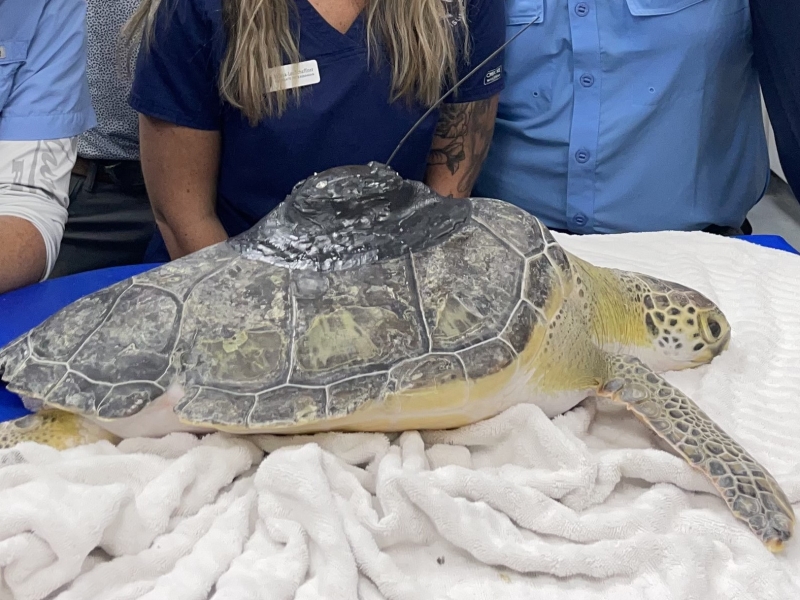
First Tagged Sea Turtle Released from Jekyll Island, Georgia
October 17, 2025
Collaborators at the Jekyll Island Authority in Georgia have released the first satellite-tagged green turtle in Georgia waters under the Navy’s “Green and Kemp's Ridley Turtle Tagging for Availability Bias Estimates” Project.
Green turtles are back on the Space Coast
July 21, 2025
A field team led by co-Principle Investigator Dr. Kate Mansfield of the Marine Turtle Research Group at the University of Central Florida kicked off the second year of tagging for our “Kemp’s Ridley and Green Sea Turtle Tagging for Availability Bias Analysis” project.
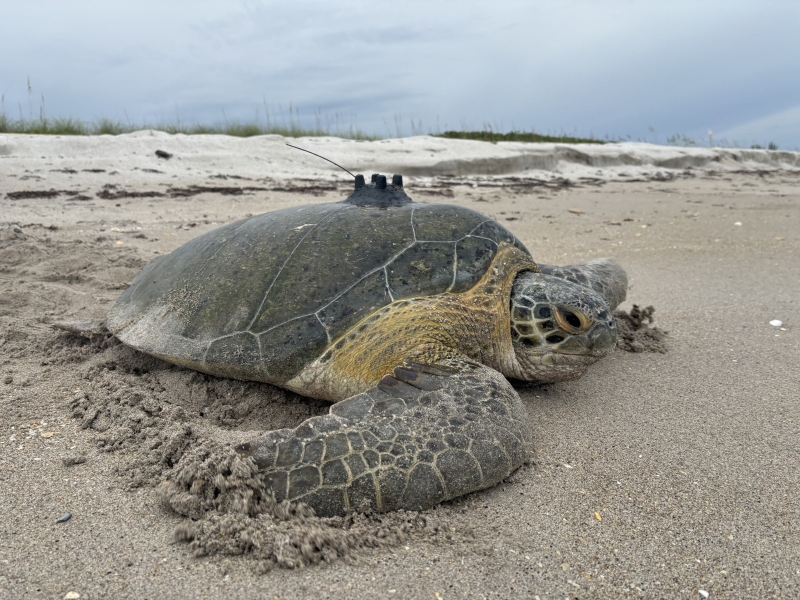
Males have joined the turtle tagging party
July 15, 2024
Researchers from Inwater Research Group (IRG), supported by Dr. Kate Mansfield of the UCF Marine Turtle Research Group and Andrew DiMatteo of CheloniData LLC, have deployed a satellite-linked data logger on an adult male green sea turtle in St. Lucie County, Florida. This initiative aims to study the diving behavior and habitat use of male green turtles along the U.S. east coast.
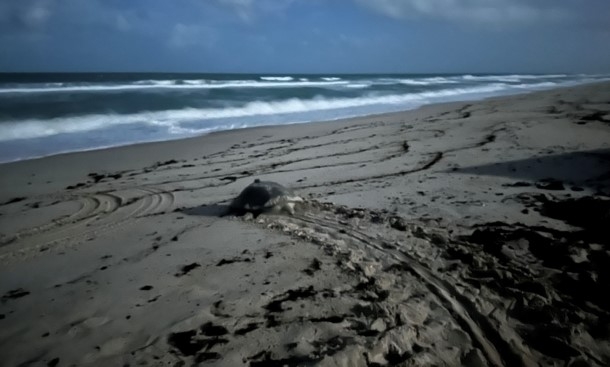
Back in the turtle tagging business
June 28, 2024
Researchers at the University of Central Florida (UCF), led by Dr. Kate Mansfield and supported by the UCF Marine Turtle Research Group and Andrew DiMatteo of CheloniData LLC, deployed five satellite-linked data loggers on adult nesting green turtles at the Archie Carr National Wildlife Refuge in Florida during the week of June 17th.
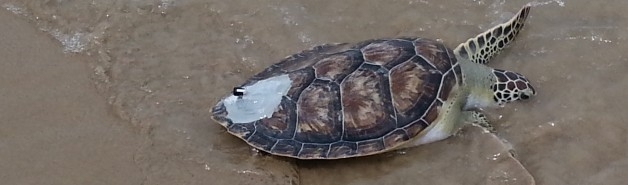
Atlantic sea turtle tagging project is underway!
July 17, 2013
The start of a new turtle project.
No related presentations or posters to display
